Public Speaking & Executive Communication Workshop for Tendam Hong Kong
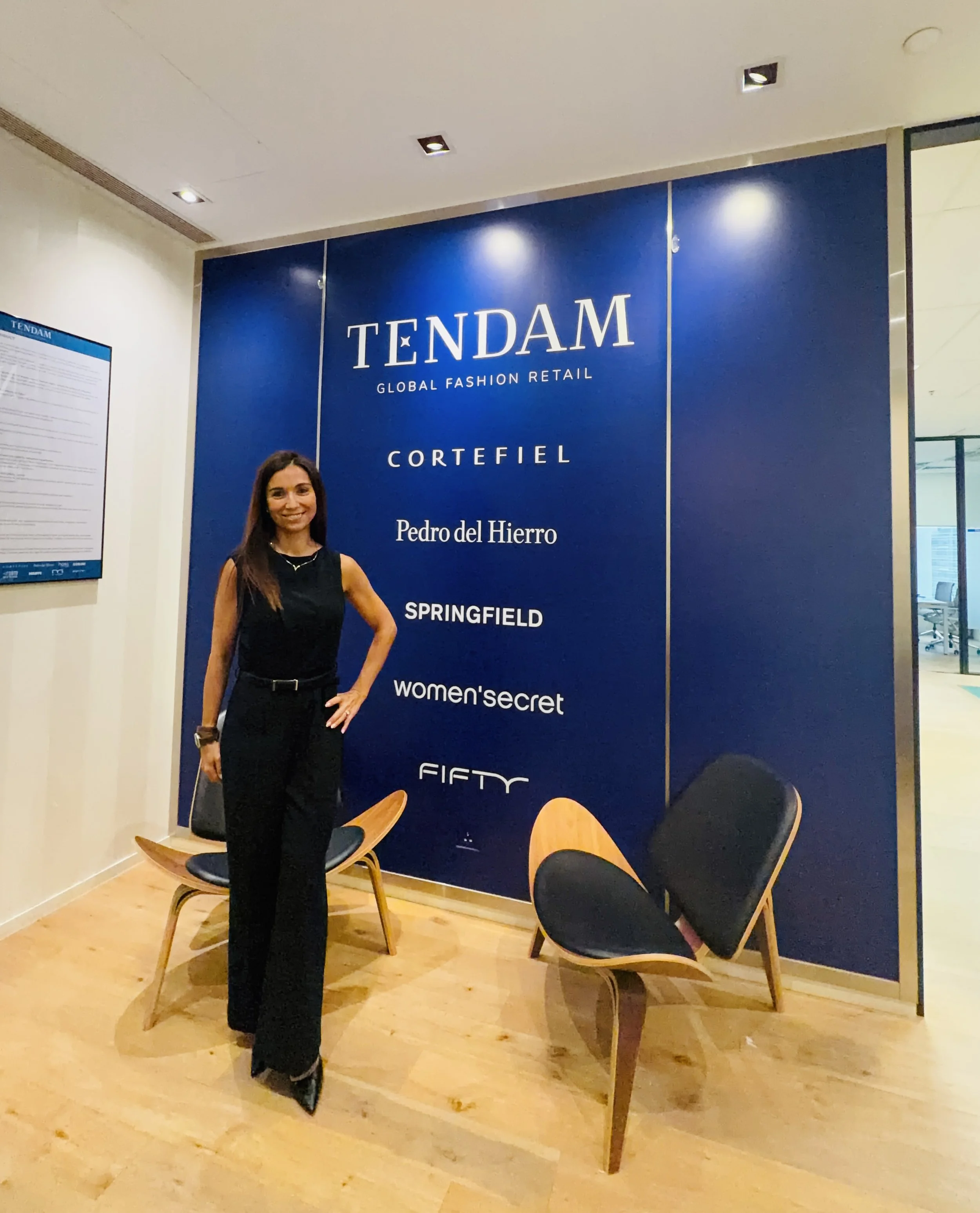
Tendam Office Hong Kong
Executive Communication Workshop for Tendam’s Leadership Team in Hong Kong
In September 2026, I facilitated an in-person workshop on executive communication and public speaking for the Tendam leadership team in Hong Kong.
The session focused on how to show up as a strategic business leader and communicator when the audience is a board, a peer group, a senior stakeholder, or a new room.
That is the work of executive presence.
In multinational teams, technical excellence is expected. What separates leaders is the ability to stay composed, make a message land, and speak with the same clarity and confidence to any stakeholder.
We designed the session around that shift: from reacting to responding, from cluttered updates to a message people can actually use, from “I hope this goes well” to a repeatable preparation system.
The workshop built on 3 key pillars:
- Build confidence speaking with any stakeholder
- Strengthen executive presence under pressure
- Help leaders move from operator to strategic voice
Mindset first: how you talk to yourself
We started where most communication training skips: the inner conversation.
Public speaking is rarely a skills problem first. It is a state problem. If the mind is rehearsing and visualizing disaster, the body follows.
We worked on three mindset practices:
Reframe the moment.
A high-stakes conversation is not a test of worth. It is a chance to create clarity for other people.
Visualize success with specificity.
Not vague positivity. A concrete picture: how you walk in, how you open, how you hold silence, how you close.
Positive self-talk.
How to rewire your inner narrative to set you up for success: I am prepared. I can pause. I know my three points.
When the inner script changes, the outer delivery has somewhere to stand.
You can have a brilliant message and still lose the room if your nervous system is in charge. Breathing is the fastest way back to control.
We practiced staying grounded so leaders can think while speaking, not just survive the speaking. Calm is not the absence of adrenaline. It is the ability to use it without handing the meeting to fight, flight, or freeze.
Confidence is not a personality trait. It is a preparation system.
We broke prep into three layers:
Mental: how to reframe your mindset and overcome limiting beliefs
Physical: how to use your body to strengthen your message (physical activity, hygration, breathing…)
Logistics: tech check, room setup, backup, timing and controlling the environment
Leaders who look “naturally confident” are usually the ones who prepared the parts nobody sees.
Respond, don’t react
This was one of the most important shifts in the room.
When a question is sharp, a stakeholder is skeptical, or the unexpected happens, the body wants to react. Reacting is fast, defensive, and often regrettable. Responding is slower by a few seconds, intentional and far more powerful.
We practiced creating that gap: notice the trigger, breathe, choose the response. That gap is where executive presence lives. It is how you stay in control without becoming controlling.
Communication: verbal, non-verbal and vocal
We then went deep into the 3 types of communication:
Non-verbal.
What the room believes before it hears you. Posture, eye contact, stillness, and the difference between filling space and owning it.
Vocal.
Pace, pause, projection, and variety. A strategic leader does not rush to prove competence. They give the audience time to keep up.
Verbal.
Language that is clear, concise, and usable. No wandering. No burying the point. No update that sounds busy but says nothing.
To make the verbal piece practical, we used the Rule of 3: three clear pillars under which you can elaborate your points. The brain remembers threes. Stakeholders thank you for them.
Practice, not theory
This was not a lecture.
We used group discussion, exercises, and live practice so leaders could feel the difference between knowing a framework and using it with people in the room. That is where communication training becomes leadership muscle.
By the end, the aim was not “better presentations.” It was this: walk into any stakeholder conversation with a prepared mind, a calm body, a clear message, and the presence of a strategic leader.
What HR and L&D teams can take from this
If you lead talent, learning, or a leadership bench in Hong Kong and across Asia, this is the gap I keep seeing:
Your operators are strong. Your subject-matter experts are strong. What they need next is the communication spine that lets them influence sideways, upward, and outward.
Workshops like this work best when they combine:
1. Mindset and nervous-system control
2. A preparation system leaders will actually use
3. Message architecture (including the Rule of 3)
4. Live practice with real stakeholder scenarios
That is how you build executive presence instead of just talking about it.
Work with me
I am a Hong Kong-based speaker and corporate facilitator working with leadership teams on communication, executive presence, and the shift from operator to strategic leader.
If you want a customized workshop or keynote for your leadership team — in Hong Kong or across the region — I would love to partner with you.
Reach out at veronica@veronicallorcasmith.com