What Leaders Should Take From the 2026 AESC Global Summit on Leadership in Hong Kong
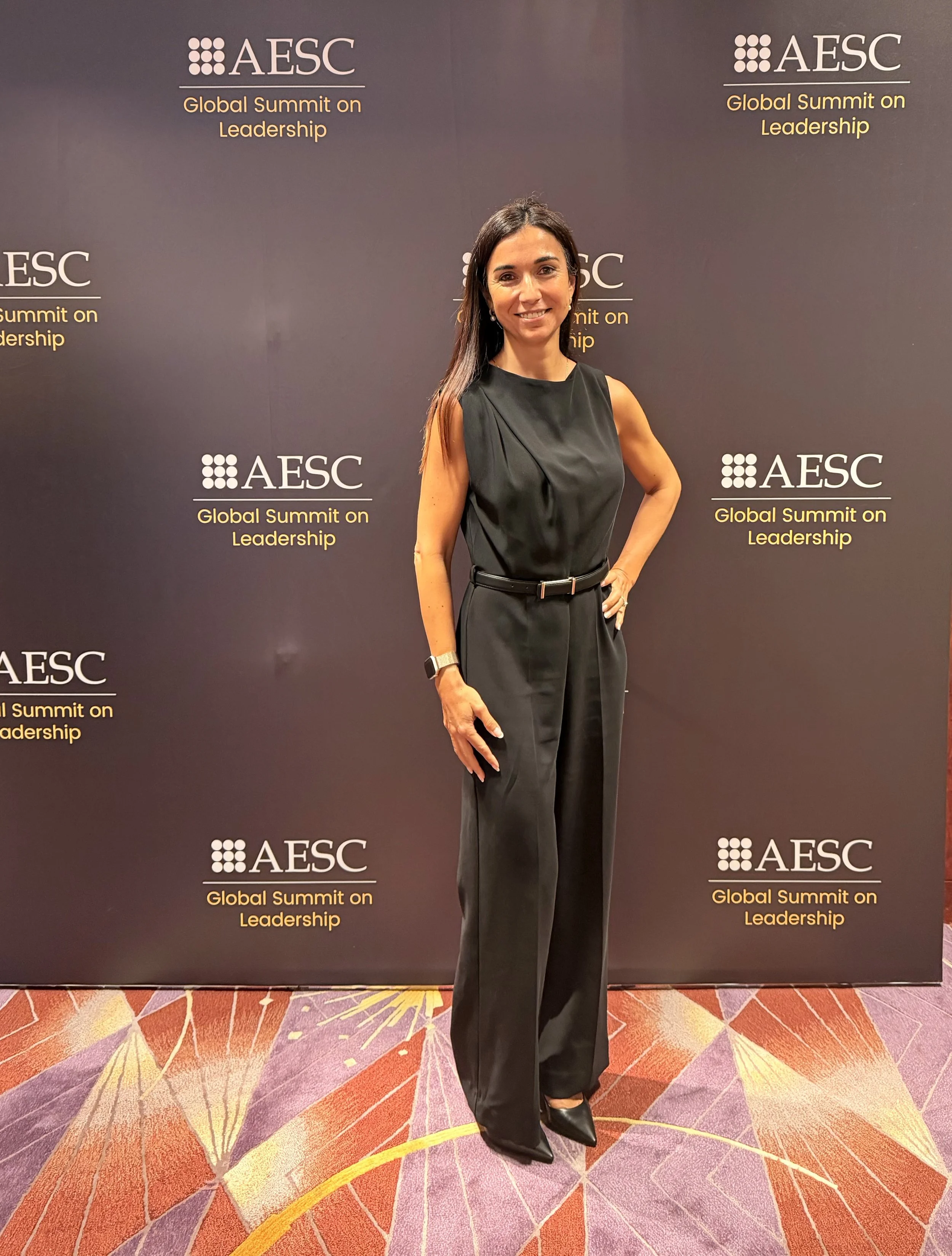
Veronica Llorca-Smith at the AESC Summit, Hong Kong, September 2026
What Leaders Should Take From the 2026 AESC Global Summit on Leadership in Hong Kong
The 2026 AESC Global Summit on Leadership in Hong Kong brought together 95 attendees from 22 executive search firms across 12 countries and four continents. The common thread across the event was how leaders must navigate complexity and change without losing the human touch.
AESC President and CEO James Edmund Datri and APAC Chair K. Sudarshan opened with a clear frame: The future of leadership is being decided in this region as much as anywhere else.
These are the trends leaders in Asia cannot treat as background noise:
Trend 1. China is not a side plot. It is part of the leadership job.
Joe Ngai, Senior Partner and Chairman of McKinsey Greater China, challenged the idea that the world’s second-largest economy is fading from the strategy conversation.
The leadership implication is real: if you cannot hold two truths at once — that markets shift, and that this market still shapes global talent, supply chains, and innovation — you will keep making shallow calls. Cultural agility is not a soft skill sitting next to strategy. It is how strategy gets executed across borders.
Leading in Asia now means building context and curiosity as seriously as you build a P&L. Teams already live inside that complexity and understanding the cultural nuances and needs gives you a competitive edge.
Trend 2. The CEO’s office still runs on judgment, not dashboards.
Lincoln Pan, CEO of Jardine Matheson, joined Catherine Kwong of Spencer Stuart for a fireside on leadership, talent, and the decisions that actually matter. The tension in the room was useful: organizations want evidence-based decisions, and they still appoint humans.
Bias in selection. Internal succession. The temptation to let AI tidy a choice that is, at its core, a judgment about character under pressure. If the people who choose leaders cannot name their own filters — culture, career path, industry pedigree — they will keep cloning yesterday’s leadership bench (status quo bias).
For anyone who hires, sponsors, or sits on a succession conversation:
1. Name your filters and values before you name the candidate.
2. Treat internal mobility as a culture decision, not only a pipeline metric.
3. Use AI to sharpen the questions. Do not let it replace the conversation.
Trend 3. Every major transition is a leadership problem first.
Dr Richard Colwill, Head of Engineering and Innovation at InterContinental Energy, walked through speed, scale, and the capability gaps of the energy transition. The lasting point was not the technology. It was the people gap.
Energy, AI, supply chain, healthcare: the pattern is the same. Someone has to lead across disciplines, hold risk without freezing the team, and tell a multi-decade story to people measured on this quarter.
Leaders who talk about mindset without talking about the transition in front of them will sound performative. The work is to connect vision to the actual capability the organization does not yet have, and then bridge the gap.
Trend 4. Resilience is a practiced identity, not a slogan.
Vivian Siu — FIA Formula 4 racer, first female F4 driver in China including Hong Kong and Macau, first open LGBT+ driver at the Macau Grand Prix, and gold medalist for the Hong Kong China team — closed the morning with a story of resilience, identity, and performance, sharing her humble beginnings and her journey towards the podium. There was a second lesson: who gets the microphone changes what a room of senior decision-makers believes is possible.
Leaders set that tone long before a keynote does. Who you platform, sponsor, and listen to tells the organization what excellence is allowed to look like.
Trend 5. People leadership has left the support function.
The afternoon panel — Alex Richardson (EVP HR, DFS Group), Sarena Lin (transformation leader and CTO at the Hong Kong Jockey Club), and Helena Shen (CHRO, KLN Logistics), moderated by Sherry Ding of Spencer Stuart — made the people agenda sound like what it now is: a transformation brief.
Disruption, AI, shifting workforce expectations. The leaders closest to talent are no longer there to administer culture. They are there to change how the organization works.
What kept landing:
- People transformation needs the same rigor as a commercial/ digital transformation.
- AI is already inside operating models. The question is governance and judgment, not adoption theatre.
- Search and succession only stay relevant if they partner on culture and future-ready capability, not only on filling a vacancy.
- Inclusion still sits inside transformation to turn diversity into a real asset (vs quotas).
If you lead a team, a function, or a business, this is no longer someone else’s agenda. Your managers need fluency in transformation, talent, inclusive leadership, and the human skills tools cannot fake or replace.
Trend 6. Brain capital will separate leaders who adapt from leaders who stall.
Phillip John Campbell, cognitive neuroscientist and CEO of enigmaFIT, put a World Economic Forum idea on the table: brain capital as a strategic asset in the AI era. Not personality. Trainable capabilities — analytical thinking, adaptability, creativity, resilience, complex problem-solving, and social leadership.
He described the core as Fluid Thinking: processing clearly, cutting through noise, and making high-quality decisions under pressure.
That is only half the job. Cultural agility, clear communication, and a growth mindset are how those brain skills show up with other people. A leader can be cognitively sharp and still freeze a room if they cannot listen across difference. The market is already joining these agendas. Individual leaders should too.
Trend 7. AI will not replace the human skills that win trust.
The closing panel — Caleb Balloch (BCG X), Phillip John Campbell, Joon Nak Choi (HKUST), Richard Lord (former Global CIO, HSBC), and Ajay Mallapurkar (Recruit CRM) — asked the question every conference is asking and few answer cleanly: what stays human?
A useful translation for anyone leading people:
- AI will change how talent is found, assessed, and developed. It will not change the fact that people follow leaders they trust.
- Judgment, ethics, and social leadership become more valuable as tools get cheaper.
- The leaders who last will pair digital fluency with cultural and emotional intelligence.
- Using AI as a reason to stop learning is how organizations automate yesterday’s leadership model.
Connected intelligence is not more technology. It is fewer barriers — physical, cognitive, cultural — between people who need to do hard work together.
What this asks of leaders now
A practical brief after Hong Kong:
1. Treat cultural agility as core leadership, not a skill for people who work “internationally.” In APAC, that is everyone.
2. Treat communication as a performance skill. Language shapes who speaks, who stays, and who gets sponsored.
3. Hold transformation, AI, and belonging in the same multidimensional conversation.
4. Learn from operators, athletes, entrepreneurs and people whose identity has been tested in public. Abstraction does not change behavior.
5. Stay close to rooms where the agenda is being rewritten. Then bring the insight back to your team.
The map coming out of the Summit is consistent. Boards and CEOs are preoccupied with China’s next chapter, succession under pressure, capability gaps in big transitions, resilience that is more than wellness language, people leadership as transformation, brain skills, and AI that still needs human judgment.
Inclusive leadership, cultural agility, and communication are not side topics in that map. They are the operating system underneath it.
A note on why rooms like this matter
I attended the Summit as a participant. I work with leaders and organisations across Asia on inclusive leadership, cultural agility, and communication. That work only stays useful if it is informed by what CEOs, boards, and senior operators are actually debating today.
Industry events are still one of the fastest ways to hear those debates first-hand: the hesitation, the repeated words, the questions that don’t make the official summary. This is how you keep your own knowledge and judgment current.
If you are planning an offsite, a leadership forum, or a conference in Hong Kong, Singapore, or across Asia and want a session grounded in these trends, you can reach me at veronica@veronicallorcasmith.com.