Cultural Agility: From a Soft Skill to a Work Skill
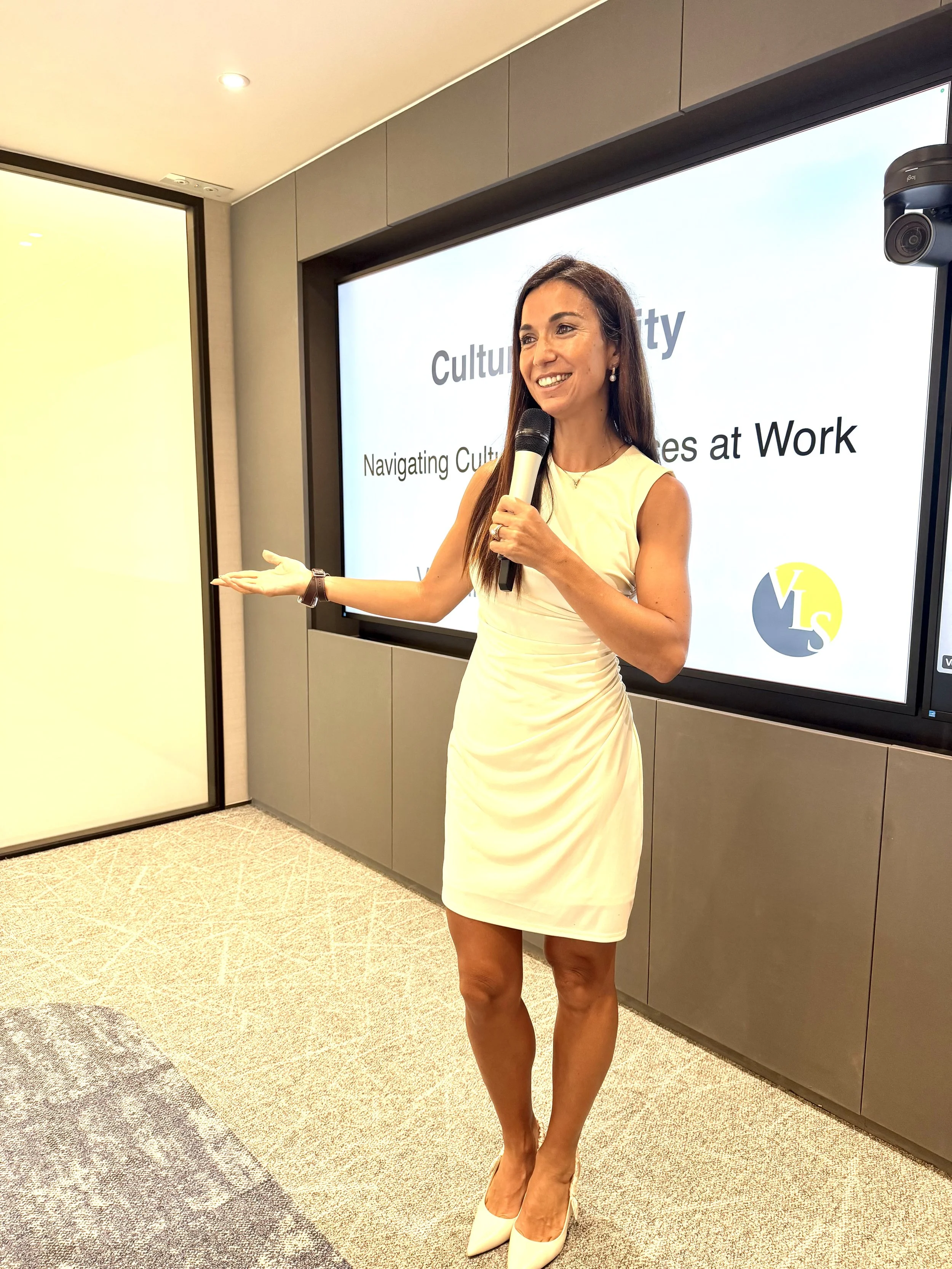
In October 2026, I delivered a Lunch & Learn on cultural agility for a private equity firm in Hong Kong. Due to confidentiality agreements, I can’t share the client’s name.
Here’s an overview of what we covered and why cultural agility is becoming a critical skill for teams operating in complex, multicultural environments.
Understanding Culture: The Cultural Iceberg
We began with the Cultural Iceberg model, by Edward T. Hall: the visible aspects of culture (language, food, greetings, or dress code) represent only a fraction of what shapes our cultural identity. The much larger, invisible part below the surface includes values, beliefs, communication preferences, attitudes toward hierarchy, time, feedback, and decision-making.
When leaders and teams only focus on the tip of the iceberg, misunderstandings are almost inevitable. True cultural agility starts with recognizing that most of what drives behavior at work sits below the surface.
How Culture Influences Our Thinking: Unconscious Bias
We then explored how our cultural background shapes how we think and make judgments. I focused on three types of unconscious bias that frequently appear in multicultural workplaces:
- Cultural bias: Using our own cultural norms as the default standard and judging others accordingly.
- Affinity bias: The tendency to feel more comfortable with, and favor, people who are similar to us in background, style, or experience.
- Halo and Horn effect: Allowing one positive or negative trait to influence our overall perception of a person.
Participants completed a short self-awareness exercise to reflect on where these biases might show up in their own interactions. The goal was not to eliminate bias but to notice it and reduce its impact on collaboration and decision-making.
From Awareness to Action: Cultural Mapping
After building awareness, we moved into the practical part of the session. I introduced cultural mapping as a tool to understand how different cultural preferences show up in everyday workplace behaviors—especially in communication, leadership, and feedback.
We looked at why flexibility matters. In multicultural teams, the ability to adapt your style while staying authentic is often the difference between friction and effective collaboration. Participants shared real situations and discussed how they could adjust their approach depending on the context and the people involved.
The CULTURE Framework
We closed with my signature CULTURE framework, a simple set of behaviors that help individuals build cultural agility in daily interactions:
- Connect – Build genuine relationships across differences
- Unlearn – Challenge assumptions and outdated beliefs
- Listen – Practice active, empathetic listening
- Think different – Embrace perspectives that differ from your own
- Understand – Seek to understand before judging
- Reframe – Look for the opportunity inside the friction
- Educate – Keep learning and share what you learn with others
The framework gave participants a practical toolkit they can apply immediately, whether in deal discussions, portfolio company interactions, or everyday team collaboration.
An Interactive Lunch & Learn
The session was highly interactive. We had open discussions, short activities, and plenty of sharing from participants. The energy in the room made it clear that cultural agility is no longer a soft skill: it is a business skill that directly affects how effectively people work together across cultures.
As someone who has lived in nine countries and led multicultural teams across Asia-Pacific, I design these sessions to be practical, relevant, and immediately applicable. Cultural agility helps organizations reduce friction, improve collaboration, and unlock the full potential of diverse teams.
If your organization is looking to strengthen cultural agility among employees or leaders, whether through a Lunch & Learn, workshop, or keynote, I would be happy to design a session tailored to your context.
Feel free to reach out at veronica@veronicallorcasmith.com to explore how we can work together.